
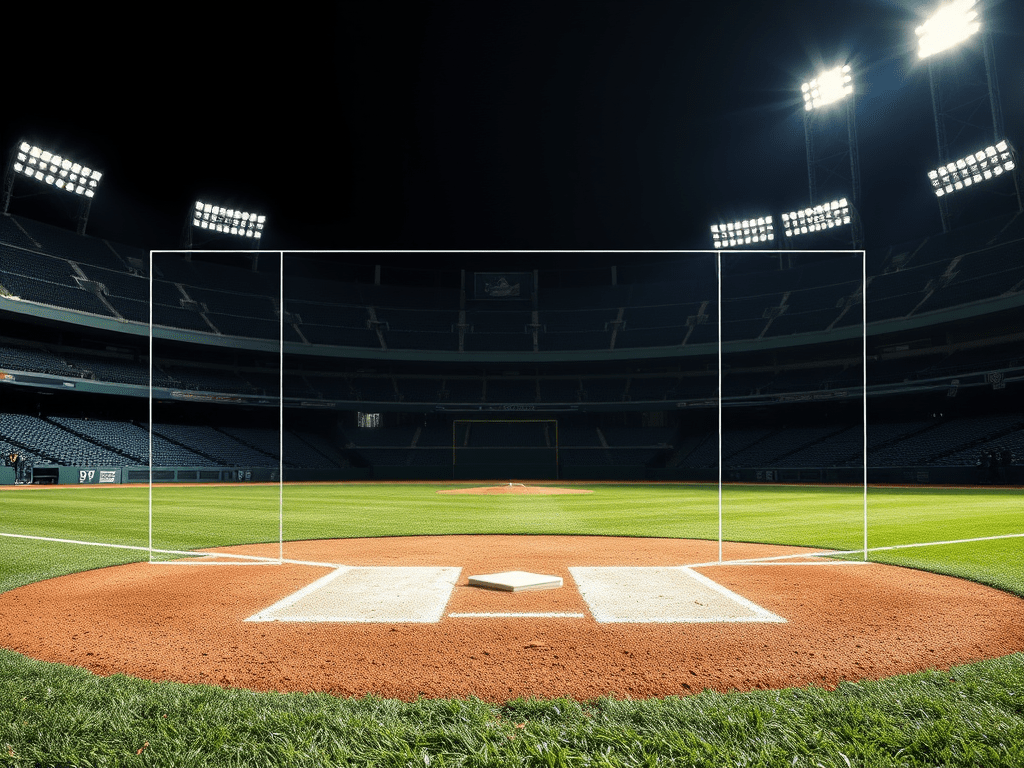
During spring training, 13 different ballparks will be equipped with the new technology to try out the new automatic ball-strike challenge system (ABS). This system is set to be a compromise between robot-umpires and traditional officiating.
Players, coaches and fans have become increasingly frustrated with the missed calls of balls and strikes. Now that we have the technology to get the call right every time, people are starting to wonder why we do not use it.
The “Hawkeye” technology is used now for broadcast and umpire review purposes. Viewers get to see a freeze frame of where the ball crossed over the plate, and after the game, the league can see how accurately the umpire called the game.
The proposal of the challenge comes with its contingencies. The MLB’s rule proposal says that each team gets two pitch-call challenges per game, but they only lose the challenge if the call stands. Only the players will be allowed to challenge a pitch. Those players include the hitter, pitcher, and catcher – No one else. The player who wishes to challenge must do so immediately by tapping their head without debating or conferring with anyone else.
What is considered the “strike zone” is predetermined for the machine. The Hawkeye freeze-frames the pitch when the ball is halfway over the plate. At that point, it checks to see if the ball is within the 17 inches of the plate’s width. It then checks the height. The current rule of thumb for the height of the strike zone is from the batter’s knees to the letters on their jerseys. The machine calculates that roughly by making the lowest point 27 percent of the batter’s height, and the highest point 53.5 percent of the batter’s height. The key word is roughly.
The difficult part about the measurements is assuming that every batter stands the same. When a batter has a more upright stance, they obtain a larger strike zone. So an umpire may call a strike right at the letters and be correct based on the batter’s stance, but the fixed numerical strike zone may disagree, hurting the umpire’s credibility.
In the past, umpire accuracy was low but, has been improving dramatically. 2023 showed the best average accuracy calling balls and strikes in 15 years. Data shows pitches are called accurately upwards of 92 percent of the time. At a 92 percent rate and an average of 15 pitches per inning, an umpire is susceptible to less than one incorrect call per half inning.
The drawbacks to the proposed rule are potentially slowing down the speed of the game and eliminating human error, which is part of the nature of the game. The MLB has incorporated a pitch clock, along with a few other rules, to minimize the time between pitches. If players are able to challenge calls, this will reverse some of that effect.
There are no sports where an official is going to get the call right every time – especially the MLB when a pitch occurs up to 400 times in a game – and every pitch requires a call. Even though the correct call is desired, missed calls are going to happen. This can occasionally lead to controversy and arguments between players, umpires and coaches. While undesirable, these kinds of disagreements shake up the game and get people talking about the sport. The occasional screaming match and ejection get people on their feet for the game. If umpires were correct all the time, all such excitement could be gone.
Umpires have been a part of the game since the beginning of baseball. With new technology like this, they could be the beginning of over-modernizing the game. While the MLB has done a good job taking steps to speed up the game, many fans like the old-school baseball style and do not want advancements like umpire assist to change that.


 Field 2 Fans
Leave a comment